
Aging, Sleep, and Light — How are they all related? | The Blue-enriched Light and Sleep Study | What is the Study's Implication? | How Older Adults Can Use Light to Improve Sleep
Overview
If you're 65 or older, you might notice that sleeping is a bit tougher now than it used to be. Suppose you are experiencing this; you are not alone.
As we age, our sleep patterns tend to change. Many older adults struggle with falling asleep or staying asleep. One factor affecting these patterns is light exposure.
Natural light helps control sleep. However, elderly persons sometimes receive insufficient bright light during the day. They usually get too much artificial light at night. This mismatch could disrupt daily activity levels and cause sleep difficulties.
According to a recent study, blue-enriched light can improve sleep quality and increase home activity levels among elderly persons.[1] However, the timing of this light exposure could significantly affect its effects on sleep.
Let’s dive into this intriguing research together!
Aging, Sleep, and Light — How are they all related?
Before diving into the research, let’s explore how aging, sleep, and light exposure are connected.
Light is essential for keeping our bodies' internal clocks balanced.[2] This mental clock tells us when to sleep and wake up. Furthermore, it impacts the production of melatonin, an essential hormone for sleep.[3]
As people get older, several things change how they process light. They include:
- Reduced light sensitivity: The lens becomes yellow and cloudy as we age. The pupil becomes smaller, and fewer photoreceptors are present.[4] These changes make it harder for light to reach the brain's circadian clock. The internal body clock receives weaker signals from natural light, making it harder to maintain a stable rhythm.
- Limited exposure to daylight: Many older people don't get enough outdoor light during the day in care homes and other places where they live.[5] This can worsen their sleep problems and make it harder to pay attention during the day.

The Blue-enriched Light and Sleep Study
A new study in the journal Geroscience examined how different types of lighting affect adults' sleep at home.[1] The research was conducted by scientists from the University of Surrey.
1) The researchers recruited 36 healthy older adults aged 60 and up who reported sleep problems. Over eleven (11) weeks, the participants were subjected to two distinct types of light conditions:
- Control White Light (4000K): This was the typical indoor lighting setting.
- Blue-Enriched White Light (17,000K): This light has more blue wavelengths, similar to natural daylight.
Each light condition had two intensities: low (300-450 lx) and high (1100-1200 lx). Participants experienced both types of light at different times as part of a randomized crossover strategy. They were told to use the light for two hours in the morning and two hours at night. This usage can be while doing simple tasks like reading or watching TV.
The researchers then gathered data with wrist-worn actigraphs, light sensors, and sleep diaries. This process helped them see how light conditions affected sleep and activity patterns. They also collected urine samples from participants to measure a melatonin metabolite.
After collecting the data, the researcher analyzed it. They compared the results from the two light conditions. Here is what they found;
- Better Rest-Activity Rhythms: Morning exposure to blue light improved participants' consistency with their sleep-wake cycles. People who had long-term exposure to morning light had steadier daily activity, which also helped them sleep better.
- Increased Daytime Activity: Participants who had blue-enriched light reported higher morning activity. Spending more time in light above 2500 lx correlates with earlier bedtimes and higher energy levels.
- Less Sleep Fragmentation: Participants experienced fewer nighttime awakenings, which improved overall sleep quality.
- Early Bedtimes: The results showed that more time spent in light over 250 and 2500 lx in the morning was linked to earlier bedtimes. Morning blue light helped participants fall asleep faster and spend more time asleep than awake in bed.
2) The researchers emphasized that the timing of exposure to blue-enriched light is key. The exposure of participants to blue light at night had adverse effects on their sleep. Here is what was found;
- Longer Time to Sleep: People who used blue-rich light at night took longer to fall asleep. This finding is because it stimulates the brain and suppresses melatonin production.
- Lower Sleep Efficiency: Blue light at night lowers sleep quality. This effect leads to lighter, more fragmented sleep.
- Weaker Daily Rhythms: Exposure to blue light at night made rest-activity cycles less stable, leading to more erratic sleep patterns.
- Delayed Bedtimes: Exposure to light in the evening causes delayed bedtime. Over time, this might misalign the circadian clock.
What is the Study's Implication?
According to experts, light supplementation can help elderly people stay healthy at home. It positively affects sleep and activity indices.
The experts pointed out that their study reveals the importance of timing when exposed to blue-rich light. Getting more light in the morning is good for you, but those benefits disappear if you get the same light in the evening.
How Older Adults Can Use Light to Improve Sleep
Older people can benefit from blue-enriched light and reduce its downsides by following these steps:
- Prioritize morning light exposure: Spend at least two hours outside in the sun. If you can't do that, use artificial blue-enriched lighting in the morning. Do things outside, like walks or gardening. to get more natural light.
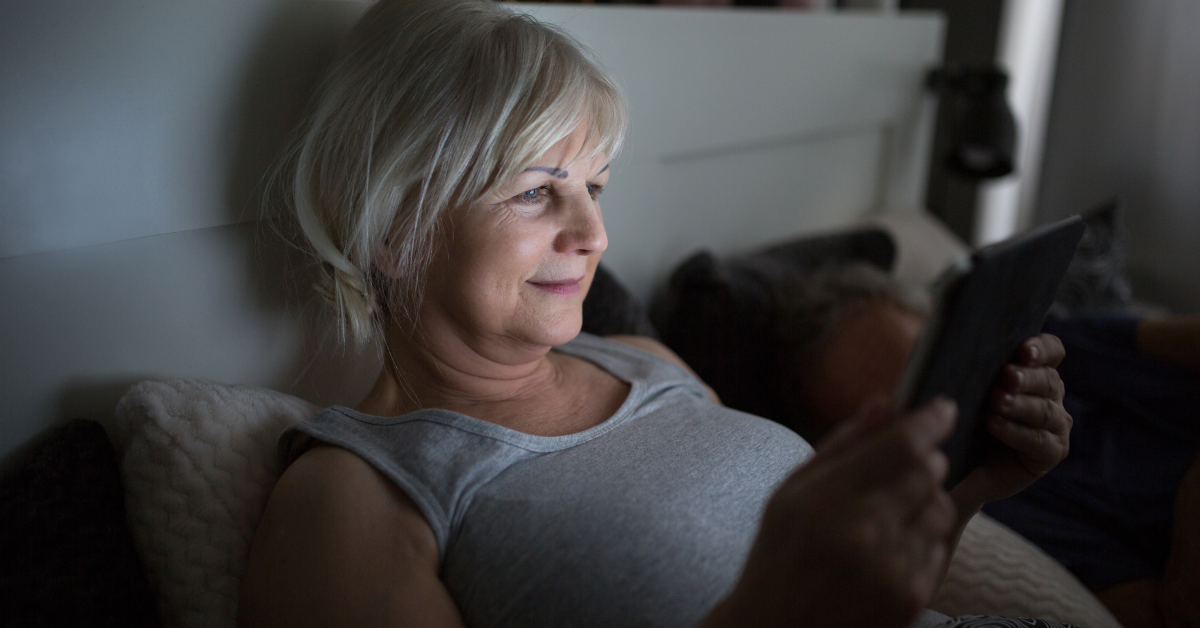
- Limit blue light at night: Two to three hours before bed, put away your screens—phones, tablets, and TVs—which are sources of blue light. Instead, change to warm, low lighting in the evening to encourage rest and sleep.
- Optimize home lighting for sleep: Use adjustable lighting systems. They can give blue-enriched light in the morning and warmer tones at night.
The Takeaway
Light has a significant impact on how well we sleep. This study reveals that a carefully designed light intervention can help older adults sleep better and be more active during the day.
Getting more blue light in the morning and more light during the day can help older adults sleep better, supporting a healthier and more active lifestyle.
References:
- Barroggi Constantino, D., Lederle, K. A., Middleton, B., Revell, V. L., Sletten, T. L., Williams, P., Skene, D. J., & van der Veen, D. R. (2025). The bright and dark side of blue-enriched light on sleep and activity in older adults. GeroScience. https://doi.org/10.1007/s11357-025-01506-y
- Zeitzer, J. M., & Lok, R. (2022). Circadian photoreception: The impact of light on human circadian rhythms. Progress in brain research, 273(1), 171–180. https://doi.org/10.1016/bs.pbr.2022.04.005
- Boyce, P., & Kennaway, D. J. (1987). Effects of light on melatonin production. Biological psychiatry, 22(4), 473–478. https://doi.org/10.1016/0006-3223(87)90169-7
- Kessel, L., Siganos, G., Jørgensen, T., & Larsen, M. (2011). Sleep disturbances are related to decreased transmission of blue light to the retina caused by lens yellowing. Sleep, 34(9), 1215–1219. https://doi.org/10.5665/SLEEP.1242
- Shochat, T., Martin, J., Marler, M., & Ancoli-Israel, S. (2000). Illumination levels in nursing home patients: effects on sleep and activity rhythms. Journal of sleep research, 9(4), 373–379. https://doi.org/10.1046/j.1365-2869.2000.00221.x