
Epidemiology | Signs & Symptoms | Sleep Terror vs Nightmare | Causes | Treatment
Overview
Sleep terrors (ST), or night terrors, are considered to be part of the parasomnia family. The symptoms of STs must not be confused with those of nightmares. They are also more common in children than in adults.
STs occur as a person transitions from a deeper non-REM (Rapid Eye Movement) phase to a lighter REM sleep phase, usually within 90 minutes of falling asleep.
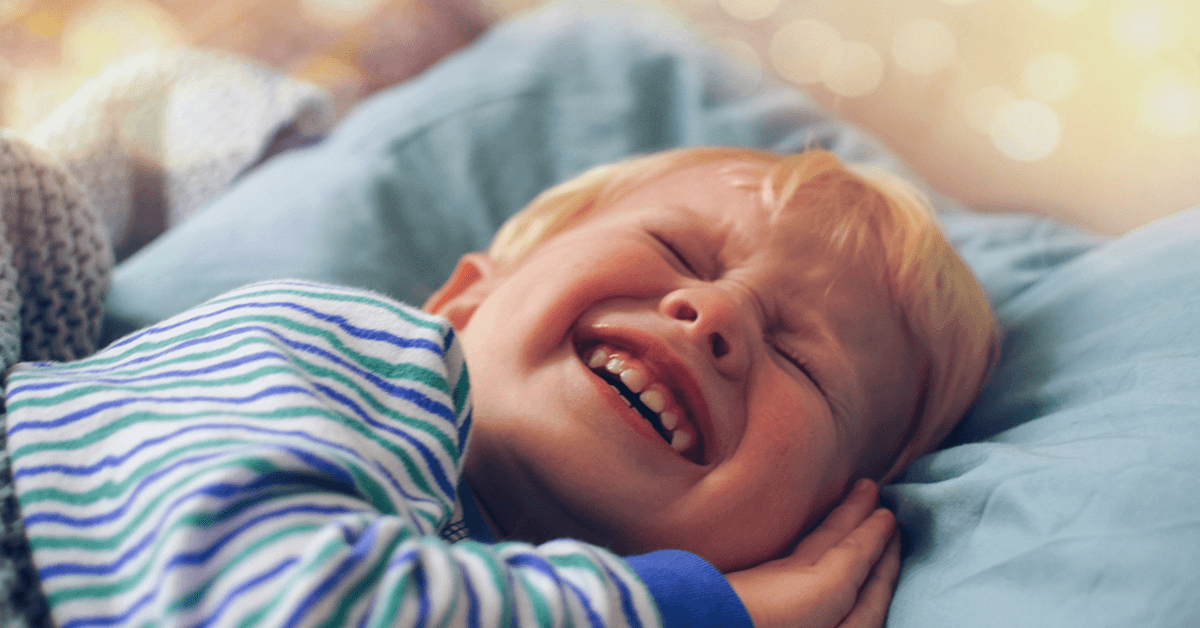
STs are characterized by episodes of screaming, flailing, intense fear, and sometimes sleepwalking. Those with the disorder remain asleep through episodes and typically have no memory of what transpired while they were asleep.
Epidemiology
Adults with STs usually go undiagnosed, as symptoms are often confused with those experienced with nightmares. STs are mostly observed in childhood (between 5 and 7 years) and are spontaneously recovered in adolescence. ST prevalence is approximately 3% in children aged 4–12 years.[1]
A study that assessed 661 people with Parkinson’s disease, aged 43 to 89 years, reported that 3.9 percent had STs. In addition, 17.2 percent had nightmares and 1.8 percent experienced sleepwalking.[2]
Signs & Symptoms of Sleep Terrors
- Sitting up in bed and crying out
- Thrashing aggressively or kicking
- Fast breathing with an elevated heart rate
- Heavy sweating
- Walking, running, or jumping, feeling restless
- Feeling confused
- Not remembering details of the episode when awoken
- Episodes range from about 7 to 12 minutes
- Usually occurs within the first half of sleep duration

How to Tell a Sleep Terror from a Nightmare?
- Nightmares usually occur in the sleep cycle’s REM phase, while STs occur while transitioning between the non-REM to the REM sleep phase of the sleep cycle. Consequently, nightmares usually occur in the latter half of the sleep cycle, while STs occur in the first half of the sleep cycle, commonly within 90 minutes of falling asleep.
- Nightmares happen as a form of dreaming, rousing the person from sleep; however, an ST is described as a feeling of half-sleeping and half-wakefulness, with the person falling back to sleep after the episode.
- It’s easier to wake up from a nightmare than from an ST.
- Details of nightmares can be recalled very clearly the next morning. In the case of an ST, details cannot be recalled.
- Children who experience nightmares will rush to their parents, wake them up, and will need reassurance that everything is okay. But children who experience STs will fall back asleep by themselves.
- Nightmares are more common in adults than in children, while STs occur mostly in children.
Causes of Sleep Terrors
Technically, STs happen when transitioning from one sleep stage to the other. So the person feels partially awake and partially asleep. The exact reason behind this sleep disorder is unknown; however, the following correlations have been found:
- STs are associated with sleep apnea, depression, mood swings, anxiety, and bipolar disorder in adults.
- In children, STs are more common in children who are over-tired or stressed.[3]
- Children from broken homes are more prone to STs compared to children raised in traditional nuclear families. Sometimes, relocation from one place to another or a loss of a grandparent or someone significant in the child’s life might trigger frequent episodes of night terrors.
- Drug abuse can also cause STs.
When is it Time to Visit a Doctor?
When symptoms began in childhood, they usually dissipate with time; however, if the episodes are severe or become uncontrollable over time, it is a good idea to consult with a doctor.
Sometimes STs become so frequent that they disrupt sleep. This disruption starts manifesting into other sleep disorders, like hypersomnia and restless legs syndrome.
In other cases, STs may even start to pose a safety risk for the sufferer. If this is the case, it is time to consult with a doctor.
The doctor may request video footage of the episodes for an accurate diagnosis, or he might question partners or family to form a diagnosis. The doctor will take the psychological history or trauma into account when making a diagnosis.
Treatment
Treatment usually includes supportive therapies like counseling, exercise, regular and proper sleeping habits, a healthy lifestyle, and healthy eating. Medication is administered in extreme cases, and benzodiazepines and anti-depressants are the two groups that are used.
Sleep Terrors Affect Relationships
STs can be disconcerting for adults or children; however, there is nothing to feel embarrassed about, and it’s better to consult a doctor to get the necessary help. Vice-versa, if your partner is experiencing STs, try to wake them up at set times before a predicted onset of an attack. Encourage loved ones to talk about their problems and consult a therapist if needed.
Conclusion
STs don’t always require medical intervention; however, treatment may be necessary, depending upon the extent of how it’s affecting one’s life.
There is no single diagnostic test for STs. It’s important that those with the disorder are as honest as possible with their doctor for a proper diagnosis.
References:
- Turan, H. S., Gündüz, N., POLAT, A., & Tural, Ü. (2015). Treatment approach to sleep terror: two case reports. Nöro Psikiyatri Arşivi, 52(2), 204. https://www.ncbi.nlm.nih.gov/pmc/articles/PMC5353201/
- Newman, Timothy (December 8, 2017). What are Night Terrors and Why Do They Happen? Medical News Today. https://www.medicalnewstoday.com/articles/301893
- Thiedke, C. C. (2001). Sleep disorders and sleep problems in childhood. American family physician, 63(2), 277. https://www.aafp.org/afp/2001/0115/p277.html