
Titration Process | Factors for Patient Success | Common Issues
Overview
For those who suffer from obstructive sleep apnea (OSA), short-term symptoms include snoring, restless sleep, and extreme tiredness.
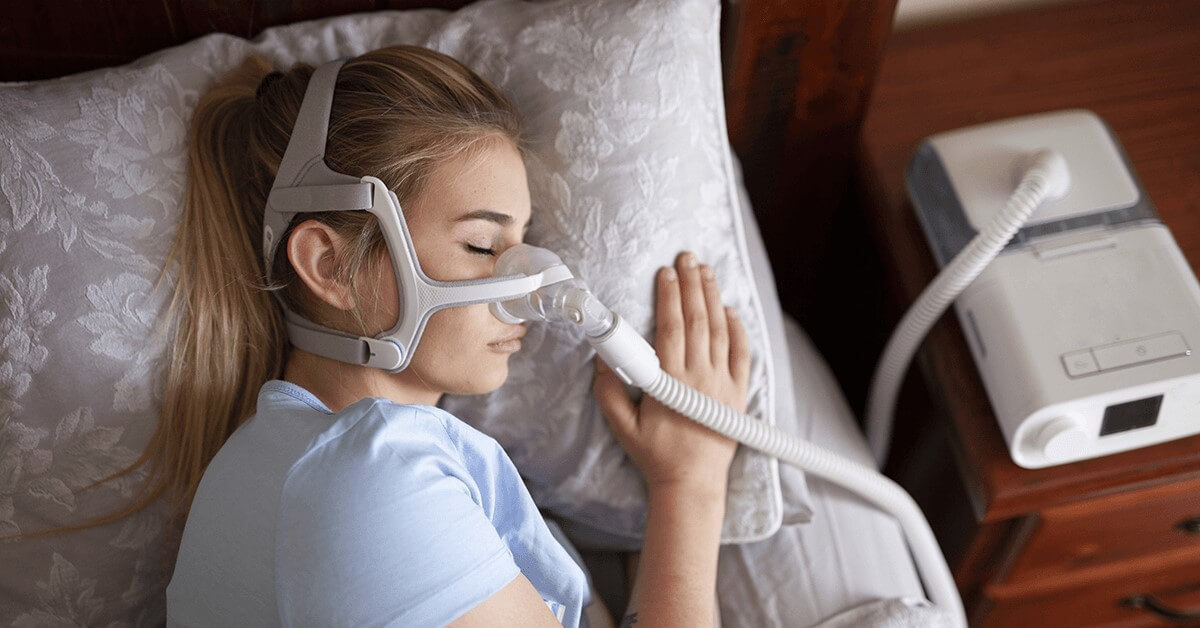
Continuous positive airway pressure therapy (CPAP) is administered through a machine that provides airflow through the airway, managing OSA’s short-term symptoms and preventing the manifestation of chronic conditions.
CPAP therapy prevents the airway from collapsing, allowing for a restful night of sleep; however, CPAP therapy is not the same for every patient.
These differences arise because the level of pressure needed is different for every person. Each CPAP machine must be titrated, or adjusted, to determine correct therapeutic levels.
The Titration Process
Patients diagnosed with OSA and prescribed CPAP therapy will have to determine their optimal pressure.
While some patients adjust their CPAP machines themselves, it’s recommended that the pressure is determined in a professional setting.[1]
Optimal pressure is determined through a method known as titration. Titrating the pressure means gently increasing the pressure over time until the minimum amount of pressure that relieves OSA symptoms is found. To do this, polysomnography, otherwise known as a sleep study, is performed while the CPAP machine is in use.
During the sleep study, the attending sleep professionals will monitor the heart rate, movement, and snoring throughout the night.
As you sleep, the pressure of the CPAP machine will be increased until your symptoms subside, showing the ideal pressure of CPAP therapy.[2]

Factors for Patient Success
Once the correct pressure is established for your therapy, there are a couple of things to consider when maintaining successful treatment.
- Choosing the Correct Device
The device you choose to apply therapy during sleep has a great effect on your comfort, rest, and overall therapeutic efficacy.
Masks come in options of nose & oral only, or a combination full facemask.
During the titration process, different masks will be available to try. The best mask offers a mix of comfort with effective treatment.
However, it should be noted that full face masks are recommended over nasal or oral options at higher pressures.[3]
- Sensitivity to Pressure
Breathing against air pressure is one of the biggest challenges with CPAP therapy.
Commonly, this situation is handled by lowering the pressure of air during breathing out, which is known as pressure relief.
Additionally, some machines can be adjusted so that the maximum pressure doesn’t occur until later in the night. This setting allows a patient to fall asleep before the full sensation of breathing against the therapy pressure is realized.
In some cases, other machines are available that automatically change pressure if too much resistance is detected.
A machine, such as the auto-titrating positive airway pressure device (APAP), is used on a short-term basis to help with issues relating to pressure.[4]
Common Issues
While CPAP can have a net positive effect on your sleep, it also can come with some common issues, including:
- Nasal dryness
- Nasal congestion
- Mouth breathing and air leaks
- Claustrophobia
- Altitude issues
When faced with these common issues, you can usually find solutions by obtaining a different CPAP device. A built-in humidifier will cure nasal dryness, a chin harness may help with mouth breathing, and newer models will automatically adjust for different altitudes.
For nasal congestion, a prescription decongestant may be prescribed by a physician to maintain therapy effectiveness.
Claustrophobia from the mask may be handled in several ways. Likely, a sleep specialist will recommend that the mask be worn for short periods during other tasks to become comfortable with the feeling. The goal is to become desensitized to the mask to be able to wear it during the night.
What's the Takeaway?
While OSA can be detrimental to your sleep and overall health, there is a gold-standard treatment to bring back restful nights.
However, finding the perfect treatment device and pressure can be difficult without the help of a specialist.
Success can be ensured by getting the proper treatment and mask to address issues with CPAP therapy as soon as they arise.
References:
- Patil, S. P., Ayappa, I. A., Caples, S. M., Kimoff, R. J., Patel, S. R., & Harrod, C. G. (2019). Treatment of Adult Obstructive Sleep Apnea with Positive Airway Pressure: An American Academy of Sleep Medicine Clinical Practice Guideline. Journal of clinical sleep medicine : JCSM : official publication of the American Academy of Sleep Medicine. https://doi.org/10.5664/jcsm.7640
- Kushida, C. A., Chediak, A., Berry, R. B., Brown, L. K., Gozal, D., Iber, C., Parthasarathy, S., Quan, S. F., Rowley, J. A., Positive Airway Pressure Titration Task Force, & American Academy of Sleep Medicine (2008). Clinical guidelines for the manual titration of positive airway pressure in patients with obstructive sleep apnea. Journal of clinical sleep medicine : JCSM : official publication of the American Academy of Sleep Medicine. https://pubmed.ncbi.nlm.nih.gov/18468315/
- Ng, J. R., Aiyappan, V., Mercer, J., Catcheside, P. G., Chai-Coetzer, C. L., McEvoy, R. D., & Antic, N. (2016). Choosing an Oronasal Mask to Deliver Continuous Positive Airway Pressure May Cause More Upper Airway Obstruction or Lead to Higher Continuous Positive Airway Pressure Requirements than a Nasal Mask in Some Patients: A Case Series. Journal of clinical sleep medicine : JCSM : official publication of the American Academy of Sleep Medicine. https://doi.org/10.5664/jcsm.6118
- Kushida, C. A., Berry, R. B., Blau, A., Crabtree, T., Fietze, I., Kryger, M. H., Kuna, S. T., Pegram, G. V., Jr, & Penzel, T. (2011). Positive airway pressure initiation: a randomized controlled trial to assess the impact of therapy mode and titration process on efficacy, adherence, and outcomes. Sleep. https://doi.org/10.5665/SLEEP.1166